It's the first day of autumn and we made it through a particularly brutal summer here in San Antonio, so time to look for seasonal changes in the plants. The traditional fall colors so common in northern climates are rare in South Texas. After a few days of rain a "cold front" blew in and dropped our daytime highs all the way down to 91F/33C. I've been outside several hours each day planting and transplanting to take advantage of the beautiful weather. While we do have a few pockets of maples and a several other plants which will change color this season, our weather typically remains quite warm right up until the calendar says winter.
That doesn't mean we don't have our own signs of fall.
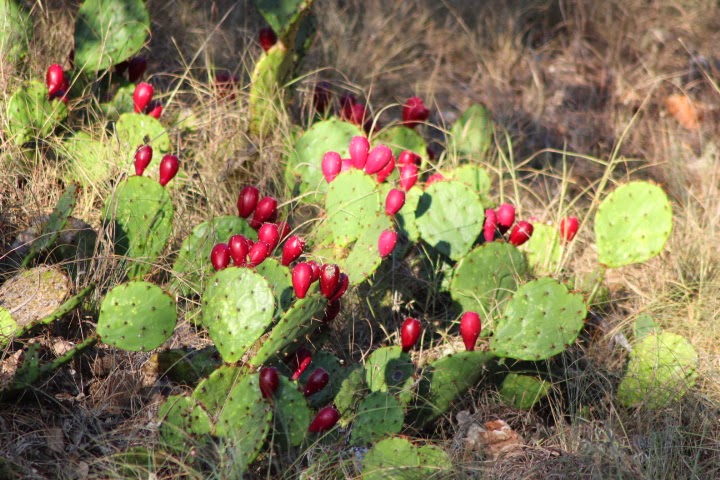
One sign is the ripening of the Tunas or prickly pear fruit of the Opuntia cactus. In the arroyo across the creek behind the house these are bright red.
Showing posts with label opuntia. Show all posts
Sunday, September 22, 2013
Wednesday, May 8, 2013
Neighborhood wildflowers for National Wildflower Week
May 4-12, 2013 is National Wildflower Week sponsored by The Lady Bird Johnson Wildflower Center in Austin, Texas.
I'm posting photos of wildflowers growing in a field near my house. The field is commercial property and will be developed eventually. I enjoy walking there and often collect seeds from plants to add to my garden. The area below is a small arroyo which feeds the creek along our backyard.
Friday, January 18, 2013
Scene on the Street: A slice of garden
Since it's slow in the garden I'm going back through photos for interesting things I've found along the way in the past year or so.
This pie-shaped spot surrounded by two retail parking lots often catches my attention as I drive by. A tall yucca with opuntia and ornamental grass at the base are good choices for landscaping in our climate. Nice looking, simple, and low maintenance. I think David at The Desert Edge would approve of this arrangement although you might not see this combination in the wild.
Friday, October 12, 2012
Watersaver Landscape Tour: Wildscape in Alamo Heights
Last Saturday I attended the Watersaver Landscape Tour sponsored by SAWS, our local water system. Six San Antonio gardens were on the tour, including five residences and one community garden.
My favorite on the tour was the native plant garden in the Alamo Heights neighborhood northeast of downtown. The house is located on a downslope away from the street which can provide unique challenges for gardeners. This homeowner created a very natural feel to the gardens along the street and driveway with a wide variety of plantings. A garage was removed at street level and a circle drive added to allow plenty of room for plants at the top of the hill.

My favorite on the tour was the native plant garden in the Alamo Heights neighborhood northeast of downtown. The house is located on a downslope away from the street which can provide unique challenges for gardeners. This homeowner created a very natural feel to the gardens along the street and driveway with a wide variety of plantings. A garage was removed at street level and a circle drive added to allow plenty of room for plants at the top of the hill.
Thursday, December 8, 2011
Garden Vistors - Arilus cristatus
The Wheel Bug is known around here as the Stegosaurus bug which is just how it looks. Slow moving and over 2 inches long, but hard to spot; it certainly grabs your attention when you see it.
More common in the eastern United States, Texas is the western end of its range. Surely San Antonio is the outer limits.
It's a form of assassin bug and blows poison out the "back end". I hope this one found plenty to eat since they are beneficial in the garden.
More common in the eastern United States, Texas is the western end of its range. Surely San Antonio is the outer limits.
It's a form of assassin bug and blows poison out the "back end". I hope this one found plenty to eat since they are beneficial in the garden.
Subscribe to:
Posts (Atom)


.jpg)

