
Fredericksburg is a beautiful, historic town and a popular getaway destination so there's a built-in demand for specialty services like locally grown flowers. Windmill Meadow Farm sells by subscription primarily to the Bed and Breakfast trade, wineries, shops, and florists in the surrounding area. Some clients even arrive with buckets to fill for their own special occasion arrangements.
Paul learned the flower business early by spending his after-school hours in his grandmother's florist shop in Gonzales, Texas. Now retired from a career with the Union Pacific railroad he made the move from suburban San Antonio life to commercial flower farming in Fredericksburg. Windmill Meadow Farm is named after their striking antique 1886 Standard Windmill which appears as their logo. They had it carefully restored in Nebraska.

Our tour begins where Paul and Nancy began, with a relatively small plot of raised beds near their workshop.

Sweet Peas! Cool weather annuals are a challenge in Central Texas and I was surprised over and over by the flowers they chose to grow in our climate.

Cosmos and more Sweet Peas on the fence.

Vintage galvanized watering cans make a fun fence decoration.

Abundance of gold flowers just waiting to be cut.

I could enjoy sitting here for a while but there's a larger flower farm to explore.

In just two years they've expanded their commercial growing business from the small garden to a sizable farm. More than 40 truckloads of top soil were brought in.
Windmill Meadow Farm supplies local chefs with Calendula flowers (shown below) for salads and apple mint goes into Mojitos at a bar in town.

Lisianthus is a spectacular Southern native I had no idea would grow here.

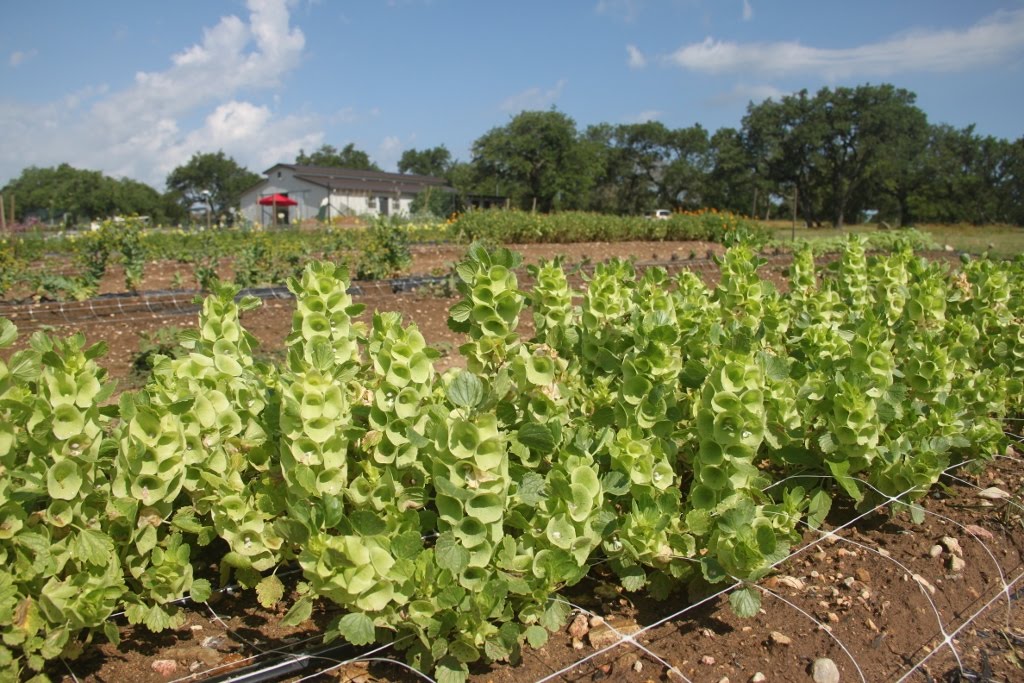
Bells of Ireland is good for color and structure.
Nigella appears to be spent....

....but the seed pods are popular to add texture and color to arrangements.

As each flower goes out of season rows are turned under and prepared for the next crop. Flowers are irrigated with well water or rain water.

Succession planting keeps a steady supply of in-season flowers.

The same varieties are planted in different parts of the plot to guard against loss by pests or other problems.

Ammi Dara from the same family as Queen Anne's Lace.

Bachelor Buttons are so bright!

Upright Liatris is a European variety.

Statice is another import which grows surprisingly well here.


Off to the side a stand of Cowpen Daisy and other wildflowers help attract pollinators. Nancy is a member of Native Plant Society of Texas.

Bird House gourds grown by request of a local group will soon climb the fence. I was interested to learn that Oak Wilt evident on adjacent property was stopped by trenching.

Seeds are a must with so many flowers to grow. Seedlings are set on warming mats and lighted racks in the barn.

Paul also uses a hand-held press to make soil blocks for seeds.

After stepping the seedlings up to 4" pots, plants are set outside to harden off before planting in rows. Paula and Nancy taking refuge in the shade as it gets hot out here.

Looks like plenty of work ahead!

Back in the workshop I admired Nancy's favorite Dahlias while Paul expertly put together bouquets for us to take home.

Flowers at the ready, a small windmill prop for their Farmer's Market table, Nancy collects vintage vases for special arrangements.

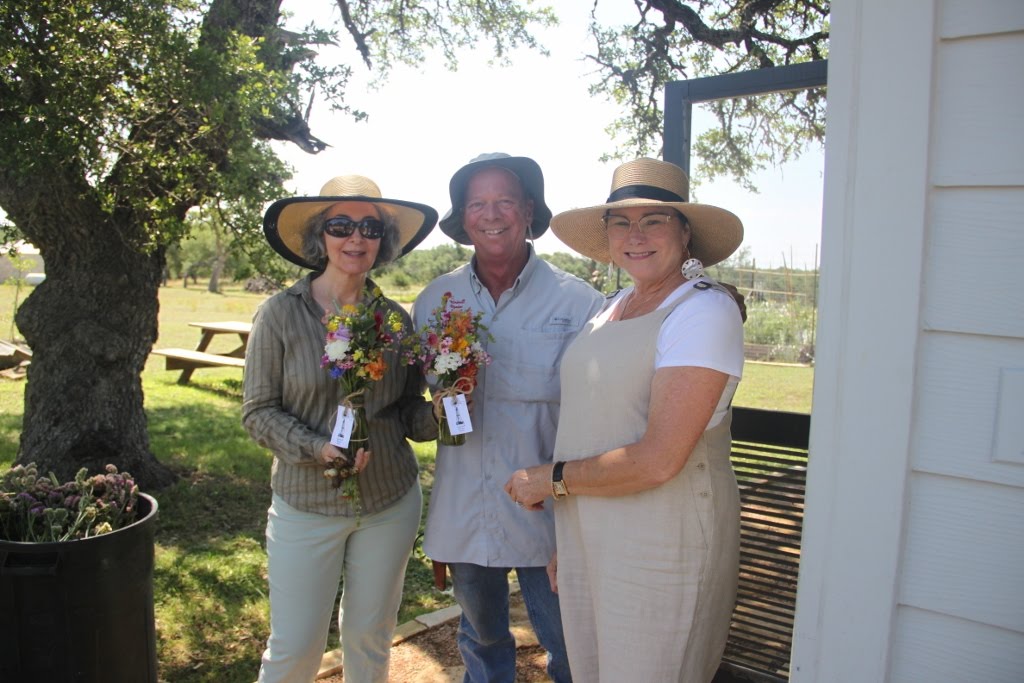
Smiles all around! Paula is on the left with Paul and Nancy.
Garden companion Stella was a star! Every time I pointed the camera her way she posed like a pro.

Another view of the vintage windmill from the shop.

Back home I took photos of my sweet bouquet and noticed something special.

Looking closely, I spotted a piece of wheat tucked in there! During our tour Paul pointed out a patch of wheat he grows for texture in arrangements and I mentioned that my late father-in-law once cut a large shock of wheat from his farm for our house. We still have it.
What a thoughtful touch!

It's fun to visit gardeners so passionate about their work. It's a good thing they love what they do because the amount of planning and work that goes into producing a steady supply of cut flowers is amazing. I came away impressed with how much they have accomplished in a short time and an appreciation for what it takes to run a commercial specialty flower operation.
You can find Paul and Nancy at the Farmer's Market in Fredericksburg every Thursday from 4-7 or at other events throughout the year. To learn more, sign up for email updates on their website and follow on Instagram.


