Wednesday, July 24, 2019

Wildflower Wednesday July 2019: Texas Greeneyes!

Oh those green eyes!

I first spotted Texas Greeneyes while browsing the impressive native plant display gardens at Medina Garden Nursery and knew instantly Berlandiera betonicifolia or texana was a plant I had to have in my own garden.  I'm joining Gail at Clay and Limestone for Wildflower Wednesday on the fourth Wednesday of each month to highlight one of my favorite native summer blooming plants.


According to Sally Wasowski's book Native Texas Plants it's easy to grow in just about any soil and doesn't need much water.  The Wildflower database tells me Greeneyes are native to my Central Texas area.  Sounded like a sure thing for my garden, and they were just that.  They are perennials so plant them once and they'll be back in future years.

Unless you have armadillos.

My first attempt at growing these ended when an armadillo dug my one single plant up by the roots just before it set seeds.  Medina is over an hour and a half drive by back roads.  It's a beautiful drive in the country so I managed to get out there again the following spring and brought home several to plant in different conditions just to make sure.  This time I added cages and rocks to discourage animal digging.

And it worked.  They have now returned two years in a row.  And I still love having them bloom in my garden from Spring to Fall.

Blooms in May with more upright growth

Reading about the care of a plant and growing it yourself are often two different experiences.  No less the case with Greeneyes.  With several plants from my second trip to Medina I could experiment with a variety of planting locations.  Available information states they grow best in part shade which I have found to be true.  The same sites also state that they flop over in shade which they do.  So I planted some in full sun.  And they flop over in sun too!  Conclusion, it's a floppy plant.  Most of the photos in this post show them leaning sideways.  I still don't care because those green eyes surrounded by bright yellow petals are just so fun to see in the summer garden.  Every flowering stage from bright green eyes to petaled flower adds interest to the plant.


New flower eyes are green.  Stems are fuzzy and sticky like sunflowers.


Varying burgundy rings emerge in the eyes as flowers age.  I'm saving those seeds to continue lining the fence with them.


It's related to Chocolate Daisy and is said to have a similar chocolate fragrance though it's not as distinctly chocolate scented.


The Wildflower Center info recommends planting with native grasses.  I might try that to give them something to lean on.  Fading Beebalm works pretty well too.  I haven't seen many pollinators on these but I do have plenty of other nectar options nearby.


Sally Wasowski writes that she waters hers about once a month in the hot Texas summer.  These went about ten days without supplemental water before they looked in need of a drink so I'd say 2-3 times in the summer months.


Height 18" to 24", spring to fall blooming, grows in most soil types with dry to average moisture, sun to shade.  Native to the Central U.S. states and down to Mexico.  Perennial in my zone 8b garden.

This is a keeper.

Join Gail to learn more about growing native plants in the garden.

Thursday, July 4, 2019

Happy Independence Day!


HAPPY FOURTH!


Bluebonnets from the spring garden, Mr. Moy Rose, Lisianthus from a recent garden visit, Moy Grande Hibiscus, White Plumbago, and Gomphrena Strawberry Fields.

Plus fireworks!


Crinum bloomed just in time.


Wednesday, July 3, 2019

Wildlife Wednesday: July 2019

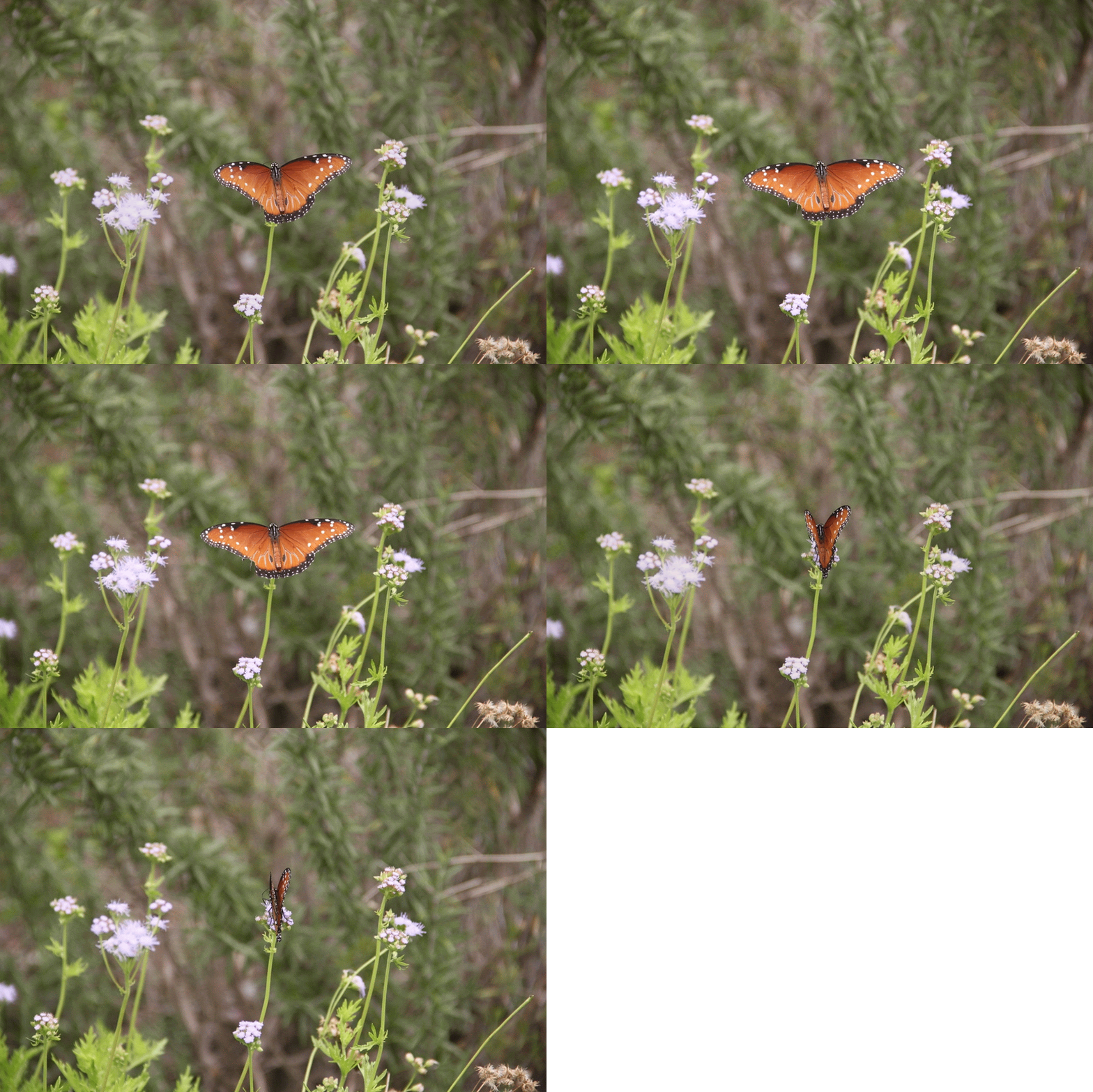
I'm joining Tina at "My gardener says..." to share garden wildlife sightings for Wildlife Wednesday.  Rain and cloudy weather have meant butterflies are a bit scarce this year even while their favorite flowers are growing better than ever.  A somewhat rare, almost sunny moment for these unusually rainy past several weeks brings out a Queen butterfly to feast on Gregg's mistflower in the garden.


According to our weather forecast we have plenty of sunny, cloudless and hot days ahead so more butterflies should appear soon.  They are able to function more efficiently in the sun as their delicate wings convert sun rays into heat energy.

Across the garden at the same time a hummingbird is feasting on young Pride of Barbados flowers.  A surprise catch since last month I lazily staked out the feeder from a chair on the porch for a sure shot at getting photos.  Hummingbirds will nectar in light rain and cloudy weather so I have been seeing quite a few.  With so many cloudy days their favorite native plants have been slow to bloom.  Then there's always that choice between gardening or photographing in the garden.


We have not seen a Tarantula spider in the garden for years, yet Tarantula hawk wasps turn up regularly so there must be some around.  The wasps paralyze a Tarantula and lay eggs in its abdomen then the larva feeds on the spider for several weeks.  Meanwhile adult Tarantula hawk wasps nectar on milkweed flowers or seek moist soil as the one below is doing.  They are the state insect of New Mexico.


In the deer report, there is plenty to eat along the creek for this White-tailed doe. 


A buck with velvet antlers enjoys drinking from the saturated creek and reminds me that it will soon be time to protect susceptible plants from "antlering" as they seek to rub off the velvet and polish up those antlers for mating season.  Susceptible plants include just about every reachable sturdy plant in the garden except older trees with thick trunks or tough bark.  The list of target plants includes some of my prize agaves.


That's the wildlife sightings in my garden for the past month.  To enjoy more garden wildlife follow Tina at "My gardener says...." and be sure to check out the comments section in her blog today for more links.

Sunday, June 30, 2019

100,000 Roses!

"100,000 roses are in bloom!" exclaimed the email from the Antique Rose Emporium (ARE), and as a bonus, owner Mike Shoup would be conducting tours of their greenhouses and growing fields near Brenham, Texas, on the last weekend in April.  How could I miss that?  And since June is National Rose Month, sharing our tour is the best way to close out the month.


I invited my youngest sister, and the serious rose lover in the family, to join me at the appointed time.  She lives in East Texas where roses are popular and easy to grow.

We were met by owner and rose expert Mike Shoup.  First stop was a talk on propagating roses.  We were invited to take one of the Katrina roses as we left.


The highlight of the tour was a visit to the greenhouse where they develop new rose varieties.  


Mike described how they use their own roses and commercially purchased roses to breed new roses for market.


Each rose is tagged with a color and tags added as they are cross pollinated.


Some of these tiny rose plants are blooming already.


The challenge is to breed roses that are disease resistant with marketable characteristics such as color and scent.  This recent article in the Houston Chronicle details more about the program.


Mike gave us plenty of time to smell all the roses!  He discussed dominant and recessive genes and other fascinating details about his craft.


A few closeups of roses used in the program.  One surprise was how many commonly available retail roses they use to breed their stock.

Hundreds of rose plants selected and ready outside the shipping shed.


Mike demonstrates their specialized boxes for shipping roses.


Ginger the dog was taking it all in too.  If she's heard it all before she didn't let on.


After the guided tour we were invited to take our own driving tour of the fields.  Ginger decided she would be our guide.


Roses are blooming all the way up the hill in the distance.


They weren't kidding about the number of rose blooms either!


We don't see these types of ponds around San Antonio.


Happy to be surrounded with roses!


Next stop is around the corner at the retail nursery for some plant shopping.

Thank you Mike and The Antique Rose Emporium for a fun and informative day.

Thursday, June 20, 2019

End of Spring Tour

As spring turns to summer tomorrow and the weather becomes too hot to spend much time in the garden I enjoy taking a tour to review recent projects and changes.

A cooler wetter spring brought more flowers than usual and bright green foliage which are giving way to the tawny tones of summer.  Silvery agaves and yuccas now become the main focal points.


Flag-like chartreuse blooms are forming on Bouteloua gracilis 'Blonde Ambition' grasses.


The colors work in nicely with yuccas in the front bed.


Yucca gloriosa variegata is thriving where many other plants failed in the hottest spot of our property.


I gave up trying to grow flowers in front of the tilted flower pot and planted low-growing Agave leopoldi which will be much easier to manage.


Three Agave cornelius along the drive were spruced up with a rock planter and new coat of gravel.  We mound agaves, yuccas and cacti to allow drainage after major rain events.


Finally got a good photo of this area.  It looks so good in person but has always been hard to convey on the blog.  Woolly Stemodia with a backdrop of white Plumbago and silvery estafiate.  Plumbago usually takes much longer to reappear after a cold winter so this year I tried covering it during freezes.  Not the prettiest technique since I used cheap bedsheets from garage sales but the results are worth it.


Carex 'Evergold' (lower right) has been added to the collection of greenery in white pots.


White Caladiums and Aztec Grass carry the theme of white accents across the walk.


Sparkler Sedge (spiky variegated, front right) gets in the picture too.  I added five more this spring for a total of nine in this bed.  That might be enough, for now.


Solid white Caladiums brighten new window boxes.


We trimmed the hedge down and replaced low wood boxes with taller crib-style planters which show up well from the driveway.


After years of experiments with container plantings that turned out boring after a few weeks I stuck Agave vilmoriniana or Octopus Agave in the pot by the tree to fill it in for a visit by my garden club.  It was a hit so it stays unless the deer begin to bother it.


Agave stricta is blooming again for the second year in a row.  Unlike most agaves it does not die after blooming. 


It may act more like a yucca, but the small lily-like flowers are definitely agave.


Along the front fence I replaced boring green plants in the small tank with new Yucca filimentosa 'Golden Sword'.  This more upright version of Yucca filamentosa 'Color Guard" works better in containers.


Sweet Autumn Clematis will soon cover the new trellis we built using salvaged fencing pieces.


Grapes are quickly climbing over the arbor in the fenced garden.


Blanc du Bois, I might need a few more to make wine.  They are there for the birds to enjoy.


The circle garden has bloomed out so the ornamental grasses take over adding texture and movement for the next two months.


One bright spot by the herb garden.


It's Moy Grande Hibiscus developed at The San Antonio Botanical Gardens.


Happy Summer!  Beautiful hibiscus for our climate which should bloom all summer with little care.


We'll end our tour as usual with a peek over the back gate as spring fades into the sunset.


And that's the tour as my garden and the gardener will weather the next few weeks in our own way.