Thursday, March 29, 2012

Springtime Roses Bloom at The Antique Rose Emporium

Roses are blooming in abundance this spring at The Antique Rose Emporium in San Antonio.  This yellow rose was just one of many blooms I saw when I visited earlier this week.


This is the view from my parking space.  I began snapping photos as soon as I stepped out of the car.   Mountains of white climbing roses and pink roses right up to the bumper! 
 

The mild, rainy winter has brought out the blooms by the thousands.  It was a beautiful sight and such a contrast to my visit in October when weather setbacks had delayed the blooms.  To the right of the entrance is a cedar gazebo surrounded by a hedge of red roses.  The white roses in the background are the same ones you can see from the parking lot.


This climber is just beginning to make its way up the gazebo post.


Red climbing rose demonstrates the variety, with the sale specimens nearby.  As you may have noticed, the great thing about this place is how they demonstrate possible ways to grow the various types of roses within a garden setting.


Shrub Rose in the demonstration garden


Container rose on display by the perennials


Roses rambling along a fence and climbing over the side of the sales office


Roses used as a hedge with blue salvia and other perennials


The giant bottle tree is just visible among all the roses


The best blooms I've seen in a couple years on this climbing rose


Another climber along the adobe wall and more rose hedges

  
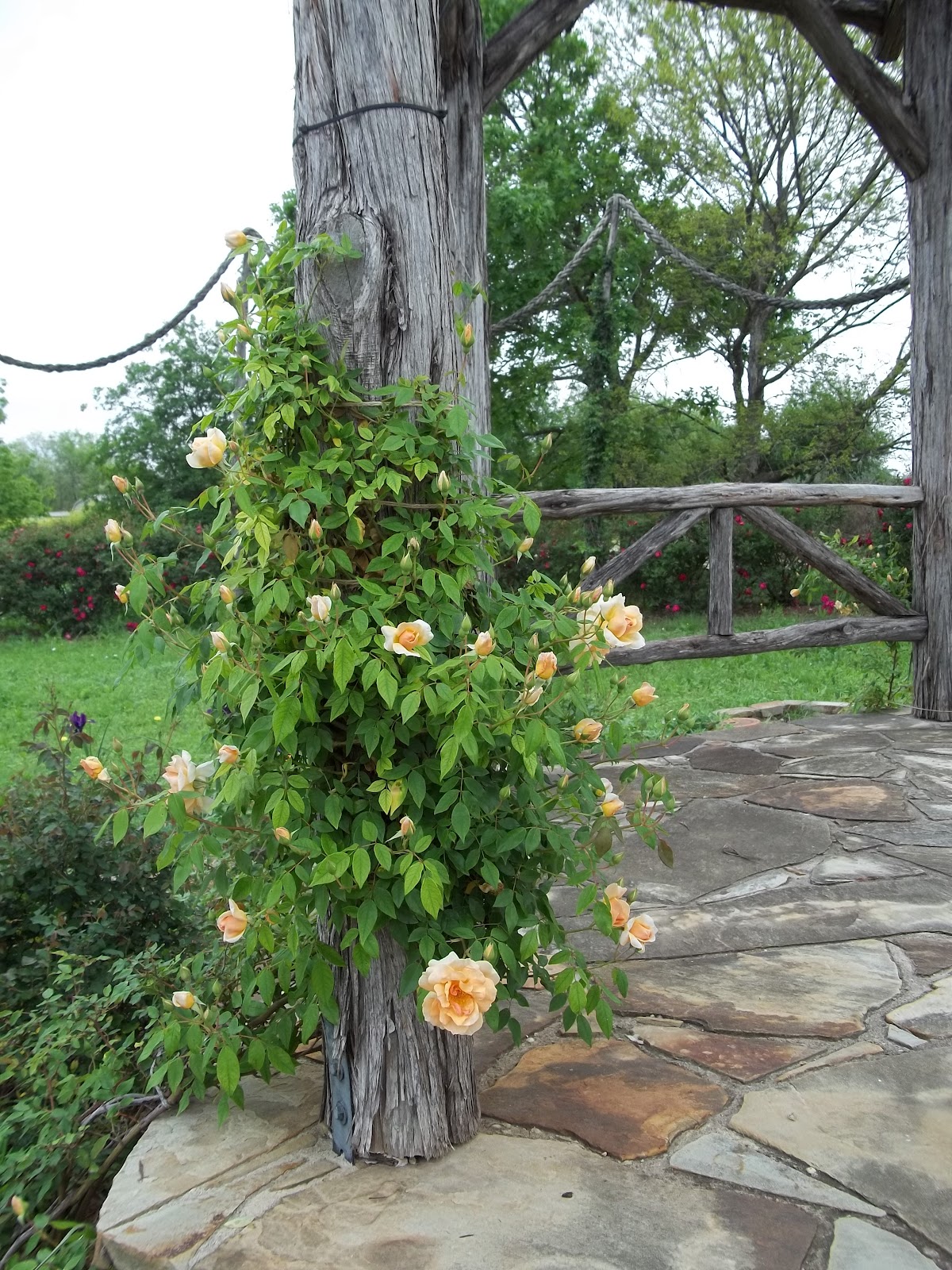
The blue courtyard featured a beautiful climbing apricot rose


More roses over and under the arbor


A bee on this rose, it was too windy for butterflies


More beautiful roses over by the Hacienda de las Rosas special events center


Cactus, roses and a windmill -- a great Texas combination to end the tour.
 

Sunday, March 25, 2012

Blooming Memories

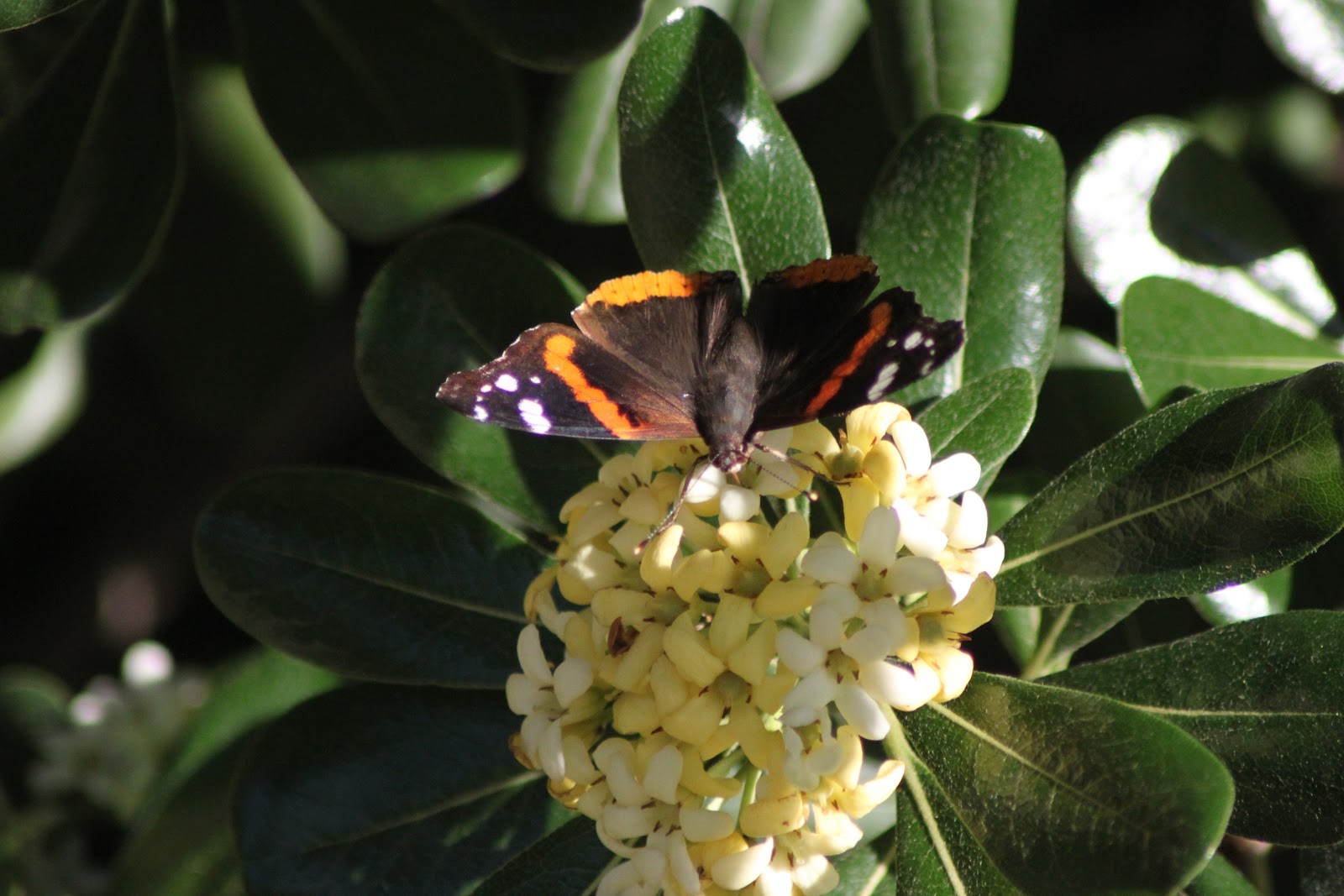
Sometimes an otherwise ordinary plant is valued for a special reason not even related to the plant itself.  For me, it is my Pittosporum (Pittosporum tobira) which evokes memories of another place and time.  It isn't among my favorites in the landscape -- until it blooms, as it is doing now.
 

As an evergreen plant, it does the job of helping shade the south side of the house without adding much interest.  In many ways it just blends in most of the time.


Part of the original landscape installation, it had seen better days when we moved back in nearly four years ago.  I considered removing, but decided to cut it back and see if it improved.  The following spring it bloomed and I understood just why it's also known as Japanese mockorange.


The blossoms have a distinctive citrus scent that fills the air, especially in the evenings.  I've read that the sense of smell carries the strongest connection to memory.  The lovely citrus scent reminds me of our first home near the Valencia orange groves of southern California and takes me back to my early gardening days.  Everything grew so well there making gardening easy.  The lemon tree in the back yard was planted in the ground and I never needed to bring anything in due to frost or freeze warnings.  We could sit on our patio in January and watch snow fall on the mountains towering above our neighborhood on the flat desert floor.  Yes, pleasant memories indeed.

The Red Admiral Butterflies share my enjoyment of the blooms


As do the bees


These bees also remind me of the orange groves in bloom.  Beekeepers brought their beehives into the groves for orange blossom honey.  We could hear the hum of the bees in the nearby groves for weeks.  Many of the bees would stray over into our yard making it risky to be outside until the beehives were removed.

 
I probably would have selected the native Texas Mountain Laurel for this spot. There are some similarities.  The Pittosporum does have shiny evergreen leaves and is very drought tolerant when established just like the Texas Mountain Laurel.  And the blooms on both are especially nice and fragrant.  The deer used to nibble the leaves, but now that it and the rosemary below are larger they seem to leave it alone.

The decision to keep this plant has little to do with those attributes.  The main reason I'll keep this Pittosporum are those lovely scented flowers that bring back special memories.

Friday, March 23, 2012

Mexican Flame Vine Shines with Late Winter Color

The last few weeks we have had more gray clouds than sun -- an unusual weather pattern here in San Antonio.  The bright, splashy blooms of Mexican Flame Vine (Senecio confusus) have added a much needed infusion of color these days.


Tuesday, March 20, 2012

Oh my, Muhly, how you've grown!

Another tale of ungardening and regardening.  Earlier this month I wrote about my regardening efforts by replacing the mystery grasses in the front island bed with Pink Muhly (Muhlenbergia Capillaris).  This was how the garden looked after putting the new Pink Muhly in place


This is how that same garden looks a couple weeks later


Notice the difference?

The Pink Muhly has "grown" pretty fast.  Well, not exactly.  It was actually Regardening #2, as I replaced the still new 6" Pink Muhly with even newer, larger ones.  I had looked all over town for the large size Pink Muhly before settling on the 6" plants thinking I needed to get them in the ground.  Of course, as soon as I did I spotted the larger 10" plants and decided to make another switch.  Sooo...  Regardening strikes again in the same spot.  And of course DH has been so very pleased to help...ha ha ha.

A bit obsessive? Perhaps. But this is the most visible spot in the front yard, the area we see first every time we leave or return.   My concern was the smaller plants might not bloom well this year and after eighteen months of sad looking grasses there I'm ready to see a nice display this fall.  Sometimes obsessive makes good gardening sense.

I'm really, really, done replacing these now.  Unless of course I find the five gallon size ready to bloom....

Sunday, March 18, 2012

There's a bee in my (Blue)bonnet!

Pollinators in the form of bees have descended on our bluebonnet patch.  We've had a shortage of pollinators around here for a few years so this working bee was a welcome sight.


This one little bee was buzzing about by herself and the phrase "bee in her bonnet" came to mind.  The phrase is quite old with an early version first written in 1513.  There are a number of meanings assigned to the phrase.  One definition says it refers to "a state of agitation".  Another is "an idea which is fixed in one's mind". 


The second definition would certainly apply when it comes to my garden this spring.  After two years of drought and three years of planning, we've been busy as a bee trying to finish several big projects before the heat of summer sets in.  The garden has been on my mind a lot these last few weeks.


The bee apparently gets a little help from the flowers, which provide color-coded signals telling the bee which ones to visit.  A Bluebonnet is made up of many individual flowers on each stalk and each flower needs to be pollinated to form a seed pod.  When the young flower is ready to be pollinated, the center is white, the color which attracts bees most.  As the centers turn pink and finally red with age, the bees tend to ignore them.


It's believed this encourages bees to visit flowers that have more viable pollen since the bees prefer the white centers.       


Guess you could say I have a bee in my bonnet since there is a lot to do in the garden this spring.

Saturday, March 17, 2012

Silver Foliage Shines for Foliage Follow-Up - March 2012

For March Foliage Follow-Up sponsored by Pam Penick at Digging I'm highlighting the silvery foliage in my garden.  I'm a bit tardy with this one since I've been getting new plants in ahead of the rain forecast this weekend. 

First up is the Elaeagnus, which I featured in my plant ABC's a few weeks ago.  The new foliage has since turned from bronze to silver, and recently with our slightly overcast days it's been very pretty.


Elaeagnus is a a pretty backdrop for the pale yellow-green leaves (just now visible) of the American Beautyberry by the driveway (Callicarpa americana).


The Elaeagnus also makes a great backdrop for the Texas Mountain Laurel 'Silver Peso' (Sophora Secundiflora) we added to the front garden last fall.  It surprised with two tiny blooms this spring.  The blooms never fully opened, but with plenty of new growth this spring it won't be too many years before we see full sized blooms.  The new foliage is very soft and the deer have been nibbling so I am going to put a cage around it for a while.


Artemesia Powis Castle in front of the Eleagnus and Beautyberries is beginning to spread out a bit.


Artemesia Wormwood out back by the creek is doing well among the wild verbena and rocks.  It's also known locally by the Spanish name Estafiate and is used as a medicinal herb.


Gray Santolina with the sages in the front island bed.  Santolina smells like new tires so the deer don't bother it.  Easy to grow from cuttings and takes heat and drought well, Santolina is a great edging plant for the gravel garden.


To see more foliage photos check out other garden blogger's Foliage Follow-Up posts at Digging.

Wednesday, March 14, 2012

Bluebonnets! GBBD March 2012

Ahhhhh, Bluebonnet time!  When it comes to native wildflowers in Texas, there is no contest for the favorite.  Bluebonnets (Lupinus texensis), the state flower, wins every time.  That's just one reason why I'm featuring these Bluebonnet photos -- all taken in my backyard -- for Garden Blogger's Bloom Day, March 2012.

 
Each spring these beauties bring back my earliest childhood memories of driving from our home in Houston to visit my grandparents in Austin.  The patches of blue on the hillsides along the way looked like blue velvet blankets to me.


I lived outside Texas for many years and the photo of Bluebonnets I kept on my desk was a great conversation starter everywhere from southern California to Boston.  The conversation usually began with "you must be a Texan...."


No surprise that I chose to grow Bluebonnets in my backyard here in San Antonio.


The Bluebonnet patch began three years ago with a few plants and this year we expanded it to a new garden area.  This is the best year for them by far.


We'll have hundreds of seeds for next year.


Bluebonnets are more than just a wildflower.  They are something magical.


Join Carol at May Dreams Gardens and other garden bloggers from around the world to see what's blooming for GBBD March 2012.